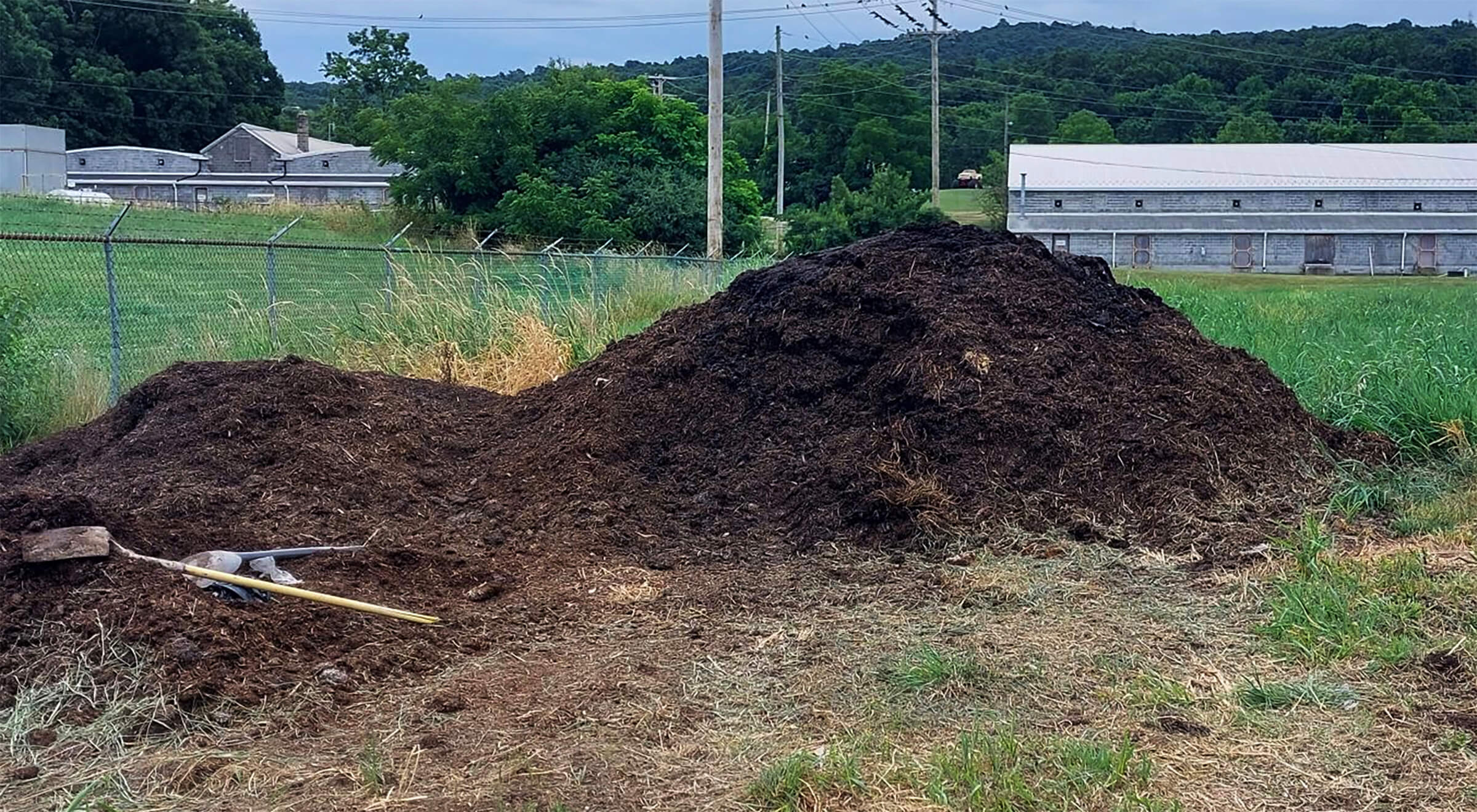
Mushroom compost (MC) is known by many names; spent mushroom compost, spent, spent mushroom substrate, but one thing is for certain, this rich, soil amendment and fertilizer is great to mix in when growing plants!
MC applied properly will enhance the structure of clay soils, reduce surface crusting and compaction (improving drainage), increase beneficial soil microbial activity, and provide nutrients to plants which can reduce the need for fertilizer.
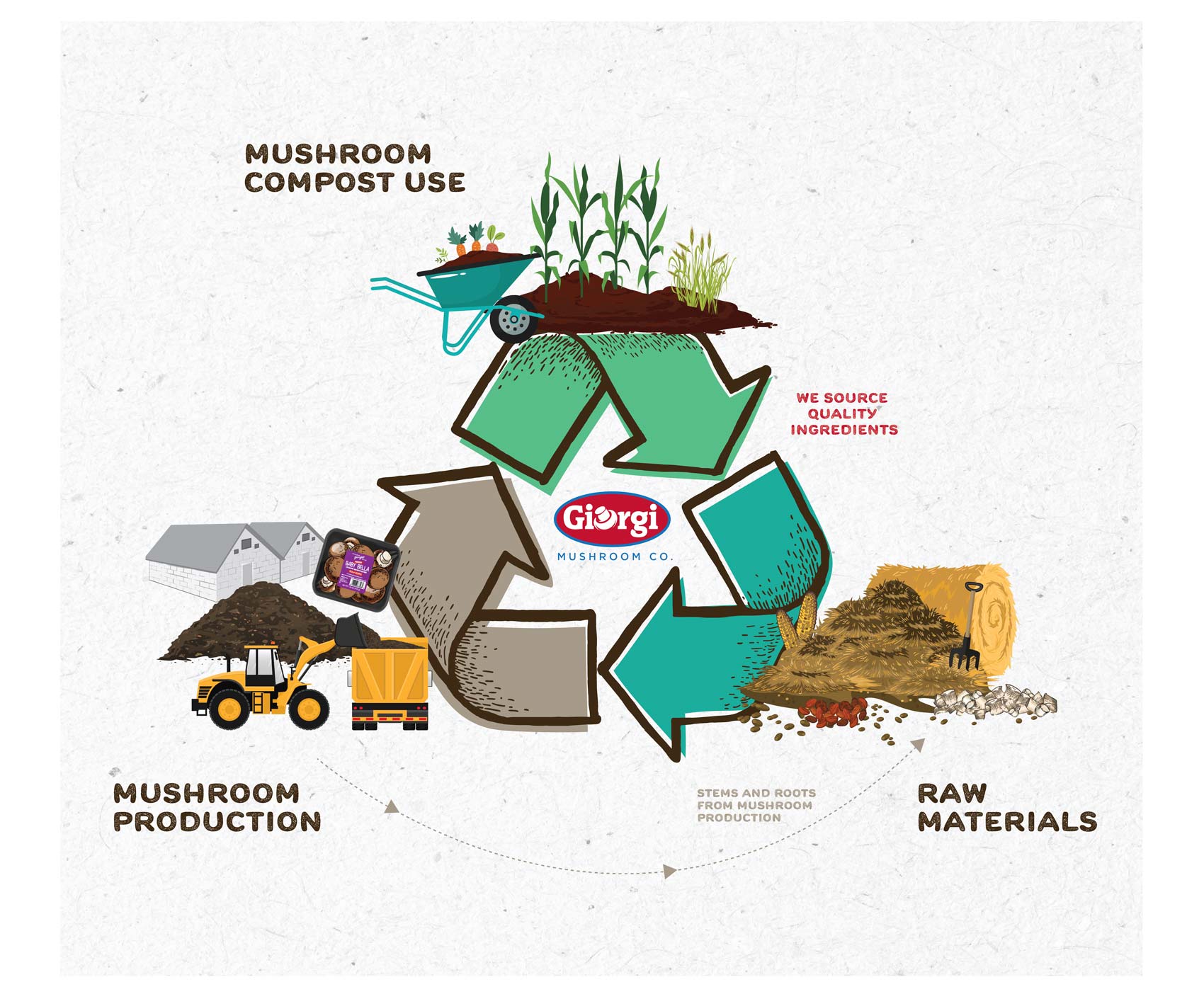
Mushroom growers are master recyclers, and we use by-products from many agricultural processes; horse-bedded straw, ground corn cobs, cottonseed hulls, recycled gypsum, fall leaves, and others to create our compost used to fuel mushroom production.
When we are finished growing mushrooms, we steam pasteurize the remaining substrate, killing weed seeds, insects, and pathogens. This pasteurized substrate is then removed from the rooms as the MC you’ll find at garden centers or your local mushroom farms.
As one of the largest mushroom producers in the US, Giorgi Mushroom Company produces well over 200,000 yards of MC each year. This is used to promote healthy plants in vegetable and field crop production, many of which grow the various crops that come back into our system to produce mushrooms. MC is also used in landscaping, soil reclamation, lawns, gardens, nurseries, green roofs, conifer production and artillery fungus prevention, across the northeast.
If you are considering using MC, here are a few rules of thumb:
MC needs to be applied in by the MC Field Crop Application Sheet below, as well as any nutrient management plans applicable to your operations. Additional information can be found in the PA DEP’s Document 254-5401-001.
For the average home garden or landscape, most soils will benefit from 1-3” incorporated prior to planting when the soil is workable (not frozen or overly wet). Poor quality soils, that are high in clay or sand, can handle 2-3”, while marginal soils should receive less than 2” spread evenly, then incorporate into the soil to a depth of 4-6”. It can also be used as a thin, 1/2” side dressing.
Our MC contains around 0.9% nitrogen, 0.5% phosphorus (P2O5), and 1% potassium (K2O), in addition to other nutrients that can be found in the table below.
We aim to provide a clean product, but do not be surprised if you see stray plastic contaminates or bailing twine from our raw material vendors, bottles, gloves, hairnets, cans, or strings. Please report unacceptable contamination levels to MushroomCompost@giorgimush.com.
Mushroom compost is a beneficial addition to both new and established lawns, flowers, shrubs, sod, and the prevention of artillery fungus.
When the soil is workable (not frozen or overly wet), prepare a new lawn seed bed in the fall by applying 1-2” (3-6 yd³ per 1000’) MC and incorporate to 4-6”. Then apply seed at the recommended seeding rate and cover with ¼-½” (1-2 yd3 per 1000’) of MC. Rake the area and water well.
When overseeding an established lawn, aerate and spread ½” layer of MC over the lawns surface. Spread seed, use a flexible rake to work the seed and MC in, and water until seed germinates.
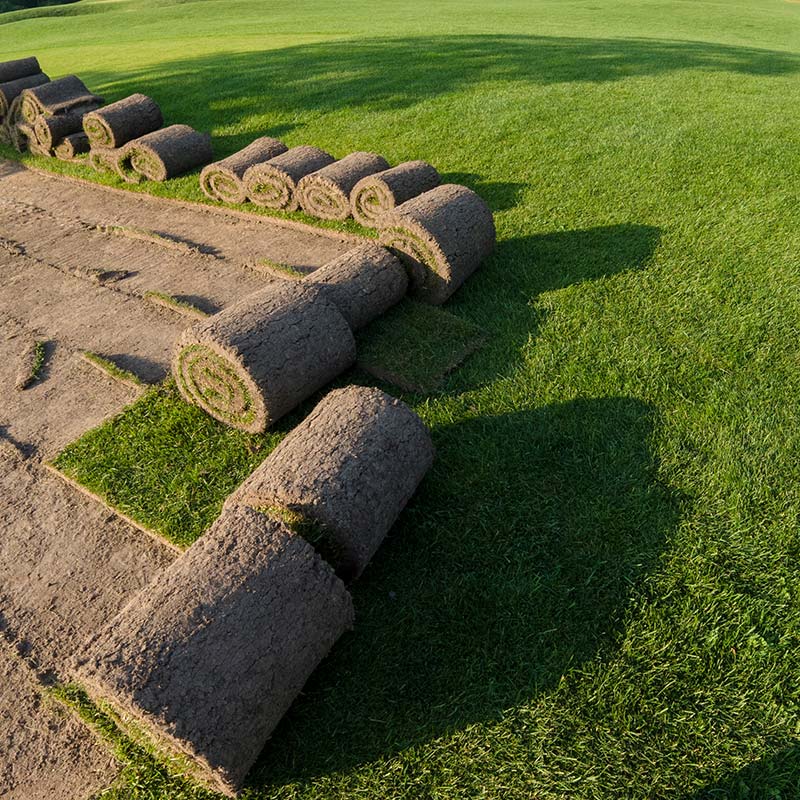
Follow new lawn recommendations to amend soils for flower and shrub beds and prior to applying sod. No other fertilizer will be needed during the first year for flowers and shrubs. Sod will root best when ½” mushroom compost is applied at the seams. Mix MC with wood-based mulches to inhibit the growth of artillery fungi (Sphaerobous sp.), which leaves permanent small black sticky spots on siding, décor, cars, and plants near mulch. As little as 20-40% MC in the mix is effective.
Beneficial for Lawns & Sod
Great for Flowers & Shrubs
Inhibits growth of Artillery Fungus
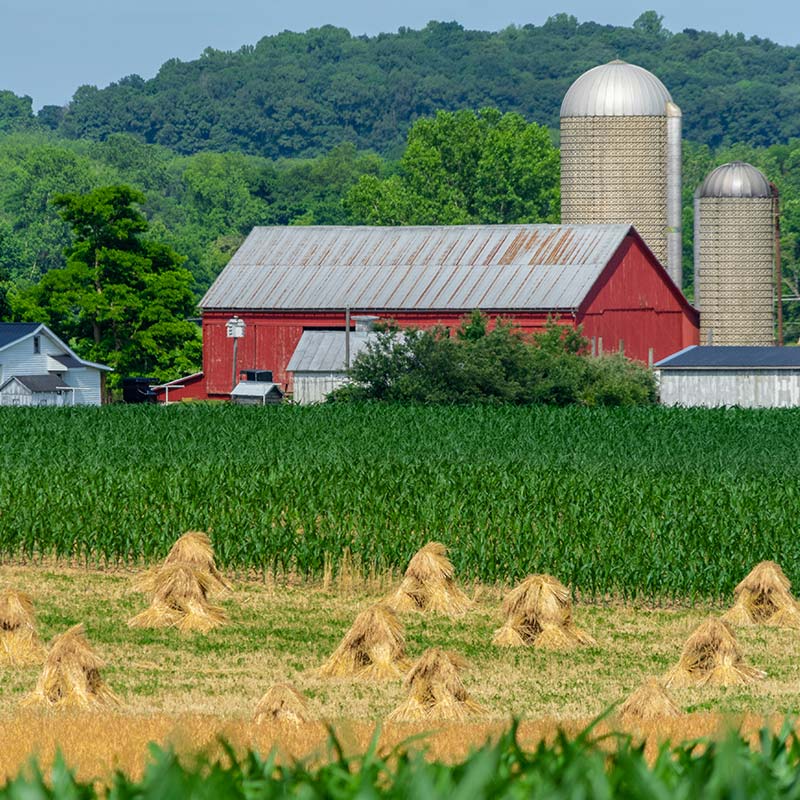
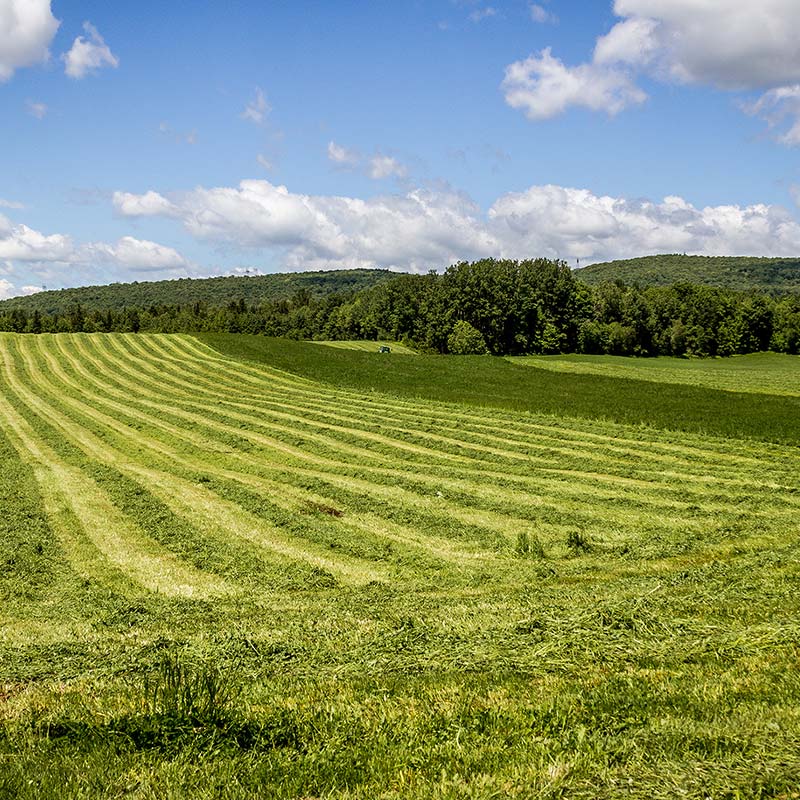
Hay Field Uses
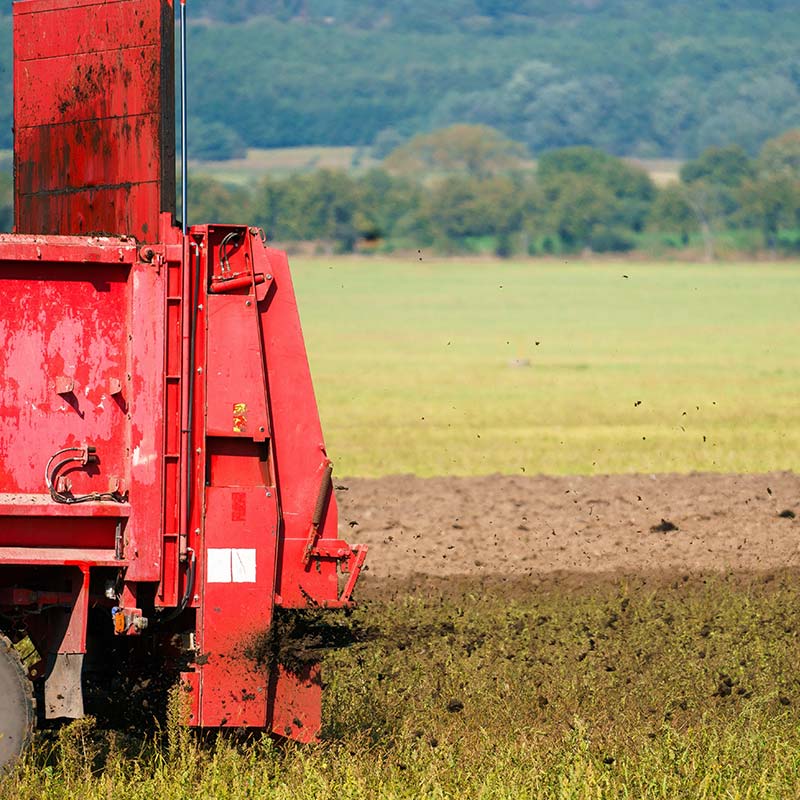
A ½-1” (68-129 yd³ per acre) layer of MC can improve the quality and quantity of hay for 3-5 years and protect crops in times of drought. There is a 24% residual value the second year, but annual soil testing should educate fertility management and MC applications. The thin layer can be applied between each summer cutting and in the winter when the ground is frozen, but not snow-covered. In the spring, the soil is usually too wet to bring heavy equipment onto the field. Once the soil warms up, the grass quickly becomes too tall for application. Apply MC with a manure spreader, then drag the field with a drag chain, or similar equipment, perpendicular to the direct of which the MC was spread.
Generic Crop Applications
Based on the application of fresh Mushroom Compost with a mean bulk density of 574.73 lbs/yd³
Penn State University Extension, Department of Environmental Protection, and American Mushroom: A National Association provide several resources on the proper use and handling of MC which can be accessed here: